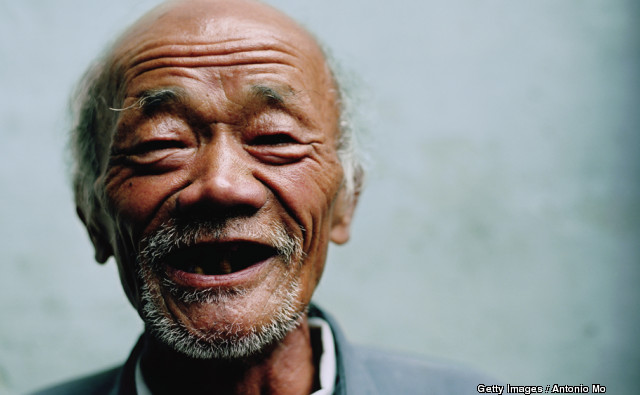
Authentic Community: From Chit Chat to Transparency

What keeps our communities as deep as a casual chat in the church foyer?  The problem, as my friend Mark Buckner explains, is that we have competing needs: the need to be loved and the need to be respected.  It feels like I have to choose one or the other.  If people really know me, I won’t be respected anymore.  But if I opt for respect and don’t vulnerably share my true self, I won’t really feel loved.  In fact I will keep feeling unknown and lonely.  I compromise at showing my cards a little to feel loved, but not too much for fear of losing respect.  We’re paralyzed in the pincer grip between these two warring needs, and most of us opt to keep it safe and shallow in our relationships.


Gary Smalley writes about five levels of communication, ranging from the shallowest to the most meaningful.  The first level is the arena of clichés, which he defines as “typical, routine, oft repeated comments, questions and answers given out of habit and with no real forethought or genuine intent.”[i]  Those are the how-are-you’s in the church foyer and the what-a-cute-outfit’s at the woman’s Bible study. 


The second level is the arena of facts, which is sharing of information that also requires no in-depth of thinking or feeling.


Conversation with other believers can easily stay mired in these first two basic levels.  It feels safe and friendly, but it doesn’t meet the deep needs of our hearts.  Venturing into the deeper levels requires risk taking.  The third level is sharing opinions (in which people may oppose yours), the fourth is sharing feelings (which hits closer to home and heart) and finally the most vulnerable level is sharing needs (which requires a lot of trust in a relationship).


What percent of your own conversations stays in the shallow water of reciting clichés or disseminating facts?  What would it look life for you to venture into these deeper levels of communication? We typically don’t “open up” because we haven’t taken the time to build trust with other believers and transparency costs us something, a little piece of our reputations.


I was eating breakfast at a busy café in Austin, Texas, with five men in a deep-hearted discussion group and we were all taking turns answering the day’s question, “In what area of your life are you being the most passive?”


Even with the loud chatter and clanking dishes around us, it wasn’t hard to think of so many areas in my life where I was being passive.  But if I were really honest, what would these guys think of me?


Everyone else was opening up and it made it easier for me to lay down my cards when it came my turn.  “I would have to say spiritually.  I rarely initiate times of prayer with my wife and almost never lead family devotions.  On that front I am just missing in action.”


Everyone around the table listened attentively as I continue, “I mean in public, behind a pulpit I can wax eloquent and appear very passionate spiritually, but at home I’m just as passive as could be.”


“Wow, Mike,” said one friend.  “That surprises me.  I would have thought that that you were leading you family spiritually.”


One of the other members tried to comfort me.  “Well, Mike, you’ve been very busy and I think we can all relate.”


“Hey don’t go easy on him, here,” the first friend cut in.  “We’ve got him squirming on the altar here and we need to thrust the sword through.”


I’m so grateful for the tip of that sword in my life.  For the last few years, whether I have lived in the U.S. or in Southeast Asia, I’ve walked closely with a group of allies that I can be completely real with.  Usually we have a long breakfast once a week like with these friends in Austin.  We celebrate victories together, share failures and get gut honest about the real issues of our life.  Sometimes that’s painful but it has been a place of tremendous life to me.


More than just pulling me out of ditches, these men inspire me to leap on mountains. We do need safe places to come clean with weaknesses, but the end goal is holiness and advancing in the calling of our lives, not just avoiding sin.  As iron sharpens iron, so one man sharpens another.”[ii]  The sharpening may be painful, but the end result is a sharp sword useful and deadly in the battle.


Are you walking alone in the battle, far from any true heart comrades?  Who would you call right now if you were alone and tempted by a besetting sin?  When is the last time you came clean with a trusted ally?  I remember when a new guy came to this group, we would always ask as an initiation question, “Do you go deep in your friendships with other men?”


The answer was always the same.  No.


I used to think just crowded the shallow end of the pool when it comes to relationships, but I’ve heard that our more relational, feminine counterparts aren’t swimming in the deep end either.  I once put this question to Janine Parrish, a pastor who has a few decades of experience with women and community.  She said in her experience women typically don’t go that deep.  It’s hard to get them together, for one thing.  There are so many reasons to keep them apart— the kids and their homework and the driving complications and all the errands.  Who has time for a heart-to-heart chat?


Whether male or female, whether this comes naturally to you or not, it’s time for you to open up a little more.  This requires the humility to realize that you can parachute into Normandy all by yourself and win this battle.  You’ve got to search through the darkness to find your company first.  Your enemy “prowls around like a roaring lion looking for someone to devour.”[iii]  That’s some one.  Don’t walk alone anymore!  Make this a priority!  Seek out a group of trusted allies.  It will require some aforethought and proactivity but the comradeship of authentic community is richly worth it.


[i] Gary Smalley, Secrets of Lasting Love

[ii] Proverbs 27:17

[iii] I Peter 5:8


Running in Church

I was a bored and fidgeting six-year-old, attending a special program at our local Baptist church.  My older sister sat on my left and our neighborhood friend Russell Brooks sat on my right.  We stared ahead at the churchy proceedings and I asked Russell what the tank of water was in back of the stage.


Russell was wiser and older (nine) and I often looked to him for advice.  He explained that the tank of water was where people got baptized.  I wasn’t a regular church goer yet but I had heard that word before.


“How do people get baptized?” I asked him.


Russell pointed at the ornate red chairs that were placed beside the pulpit on the stage, facing toward  the congregation. “You see those chairs?” he asked.


“Yep.”  They looked like little thrones to me.


“When someone feels like they are old enough to get baptized, they run really fast from the back of the church down the aisle, jump up on one of those chairs and try to fly all the way over the choir loft and into the water tank. If they make it, they are baptized.”


Wow!  Suddenly I wasn’t feeling bored in church anymore.  “What happens if they don’t make it?” I asked in fascination.


“Then they aren’t old enough to be baptized and they have to try again later.”


Okay then.  I looked around at the congregation, mostly older folks, and figured they had already made their run long ago.  I scanned the crowd for the younger people and wondered who would try out their wings tonight.  It would take a lot of guts to try to clear that choir loft but I couldn’t wait to see someone try.


As the church service wore on, most people just sat there and listened passively to the pastor drone on and on. I kept glancing back at the back of the church, but no one was even warming up for their take-off, not even during the altar call.  I started wondering if Russell was telling the truth, especially after I noticed my sister once shooting him a mean look.  Maybe he was just pulling my leg, but what if wasn’t?  That would be so cool to see.  I kept an eye out just in case.


The disappointment didn’t lift sad to say because no one lifted off that night.   I quickly learned that churches are predictable places.  Although I am very grateful that I met Jesus at that church, I never did get a chance to clear the choir loft.  I got baptized the old fashioned way.


Most people’s experience with church is boring and predictable.  The world is longing for authentic community, a place where they can be real and known and loved unconditionally. A place where there is the give and take of real relationship. These seekers walk into our churches, feel a sense of shallowness and walk right out.


In my next few blogs posts I want to focus on two things to help our communities become a little less predictable and a little more vibrant: transparency and healthy conflict.


Stay tuned….

.

– Mike O’Quin, author of Java Wake and Growing Desperate

Joy Ride (Embracing the Seasons of Life)

When I served as a youth worker back in California, we asked the kids at our church to give a Saturday a month to serve at a convalescent home. We’d scatter through the hallways, going into the rooms of the elderly, sitting down next to their beds and listening to their stories. We’d often strum our guitars and sing for them.

          Out of all the men and women we met on those Saturdays, one person in particular etched a permanent groove in my memory. I never knew the man’s name, but I can still hear his voice sounding like tires crunching gravel. His faded, grey eyes still contained enough hope to reveal a few ounces of determination. He said, “Push me over there.” I happily wheeled him down the white tiled corridor. We came to the end of another hallway. Again, he said, “Turn here.” After a minute, I realized that for him, this wasn’t just a joy ride. He had a destination in mind. “Now, left here.” Soon we found ourselves at the back of the Convalescent Home. We approached the end of a narrow hallway. A sign revealed that this was an emergency exit. Before us were the words, “ALARM WILL SOUND.”

          “Okay. Now please just push that door open for me.”

          “What?”

          “I’m not strong enough to get the door open! Please, help me. Quickly!” Speaking with determination, he twisted around in his wheelchair and forcefully gripped my hand, “Please! I can’t stand it in here! I don’t want to die in here. They won’t let me out. I want to see the sky. Please let me see the grass and smell the flowers again.”

          His eyes bored into mine and he gripped my hand even harder.

          “But I can’t just open the emergency exit door!”

          When I got home that afternoon, I couldn’t get the man’s voice out of my ears. This week I remembered again the feeling I had that day as I apologized to that man for not being willing to help him escape his dungeon of despair. Having just “celebrated” my 43rd birthday, I am aware that birthdays don’t hold the same excitement as they used to. They are now reminders of the brevity and fragility of my existence. Ah, forty-three. It feels like I’m on top of the mountain. I can see for miles from up here. But there’s only one direction, and that’s down. My life is now on a clear trajectory of demise. No matter how fast I peddle my bicycle, I will never be able to silence the drum beat of time. The stuff I value the most will be torn out of my grasp. My ability to see the faces of the people I love will dim. My ability to listen to birds chirping in the branches of trees will fade. Walking will become more painful with age. There is no escaping it. This dreadful feeling of being chained to time is the reason why society is so obsessed with youth. Look all around. Face lifts. Hair coloring. Anti wrinkle creams. We can’t stand the thought of growing old. Youth is a religion.

          Living in Asia for the last eleven years has taught me many, many lessons. Paramount among these lessons is the Asian way of celebrating the aging process. Here, people more naturally embrace all stages of life. With age, most people are not clamoring to reverse the effects of time. The older a person becomes, the more respect is afforded by society. The elderly are honored and celebrated rather than stuffed away into convalescent homes. Their voices matter. They are cherished as vessels of wisdom, vital to the health of the community.

This, to me, feels right. 

          Kierkegaard writes about living with courage to embrace the fragility and brevity of this life. He sees this courage as the evidence of faith. “The lily’s coming into being becomes its destruction, indeed it seems as if it came into existence and became beautiful only to be destroyed—yet the obedient lily obediently submits to this, it knows that such is God's will, and it shoots up…. A man, or we men, in the situation of the lily would be in despair at the thought that coming into existence and destruction was one thing, and therefore would prevent ourselves by despair from becoming what we might become, though it were but for an instant. With the lily it is otherwise. It was absolutely obedient, hence it became itself in its beauty, it became actually its whole possibility, undisturbed, absolutely undisturbed by the thought that the same instant was its death."


Gifts of the Spirit ACTIVATED

I LOVE IT WHEN CHURCHES send short term workers here to Southeast Asia. It’s our chance to serve those in America who have sacrificed for us to be here. We are committed to giving the folks back home a life-changing glimpse of the world beyond America’s borders. Over the years, we’ve seen some Spirited teams, and one group stands out in recent memory. Led by Pastor Scott Miller from Graceland Baptist Church, one of my most memorable teams drove through a gently falling snow to get to the Louisville airport. Thirty hours later, they were crouched in a motor boat, snaking their way through the dense green jungle in thick humidity and equatorial heat.


          As our boat brushed past the vines and tree branches of an island, we were suddenly surprised by an attacking, swarming horde of grey monkeys pillaging our bags for food while hissing through bared teeth. Through the ten days that followed, I was astonished to see how this team rose up creatively to face many challenges and difficulties. Each team member contributed a vital and unique role. As we served one another, our combined spiritual gifts blended to forge an unforgettable and unstoppable movement of love. Each night mosquitoes whined in our ears while we tried to sleep. We slogged through mud. Rampaging rain storms swamped our boat. Day after day, we never knew what we were going to eat or where we were going to sleep. In conditions that would normally reduce me to discouragement and desperation, this team’s spirits kept rising. Each pressure-filled moment was countered with a burst of joyful response.


          Each morning, I took the role of scout. As our boat arrived in a village, I jumped onto the shore and sought out the elders to get permission for us to spend the day there. Using their language, I delivered the message God had put in my mouth: “Perhaps yesterday you might have been suspicious if a group of Christians arrived in your village. Maybe tomorrow you will feel the same way. But allow today to be a special day! Let God show you how much he loves you!” Each morning we were received with open curiosity.


          John Tackett is an oral surgeon. He and his wife Ginny went to work pulling the rotting teeth out of peoples’ mouths, providing immediate relief from their tooth aches. Jennifer, Juliana, and Leela organized programs for children. Using music, creative arts, and crafts, they showed the children how to make colorful bracelets representing the story of the Gospel. Another group went to work drilling wells wherever people did not have access to clean water. Meanwhile, Jim was encouraging everyone, reviving our spirits, and spreading cheer all around. All day long, we invited the people to come later that night and hear Pastor Scott share the Gospel. By the end of the trip we had seen over forty people respond to Christ.


          At the end of their visit I drove the team to the airport. We all felt that we had tasted of what it means for the Body of Christ to function as the salt of the earth and the light of the world. Each of us were so different from one another, and yet only together could we have seen such miracles. I am convinced that it is when the Body of Christ moves into mission that our Spiritual gifts are activated on behalf of God's own purposes. Apostle Paul describes himself as laboring and struggling with all of God’s energy, which so powerfully works in him.[1] It is when we align ourselves with God’s passions and trust in his Spirit that we discover this mysterious energy bursting out from within us. We find ourselves rising, advancing, creating and overcoming the world. 


[1] Colossians 1:29.


Transforming Worship

HAVE YOU EVER BEEN EMBARRASSED to hear yourself laughing exactly like a good friend laughs? Our voices often imitate someone we love and admire. This is because God has created us, his image bearers, to adopt the mannerisms of the objects of our worship. The Creator designed us to be worshiping beings. We simply can’t help it. People eat, drink, sleep and worship. Worship is part of our constitution! God’s purpose for making us this way is that we will become increasingly like him.


          Countless numbers of people have told me that my son Stephen looks like me. Photos of me as a little boy are strikingly similar to photos of my son. Just as a little boy appears as a small image of his daddy, our Father desires for us to increasingly resemble him. Paul notes this in his letter to the Ephesians, “Be imitators of God, therefore, as dearly loved children and live a life of love, just as Christ loved us.”[1] There is a catch, however. If we direct our worship to something besides God, the law of transforming worship still applies! If we spend our lives worshiping money, we will most certainly become transformed. Our hearts will become enslaved by greed. To worship an inanimate object such as a house, a shiny new Lexus, or anything besides God results in being transformed into inorganic, stone cold hearts. Be assured, there is a certain way to reduce yourself into an inert, changeless being; existing statically and void of metamorphosis … worship yourself.


          As we raise our voices to God, we are consciously saying something like, “What you are is what I value more than anything else. I desire you and will not hold myself back from you. Something about you captures my heart and beckons my soul. Everything I know about you compels me to confront everything that I know about me.” Worship is activated on our acceptance of who God is and what he has revealed about himself. God wants us to know that he is the Origin and Progenitor of love. He is the Creator. He calls us to imitate his action to make himself nothing, taking the very nature of a servant, humbling himself and becoming obedient to death.[2] Why has God humbled himself? In response to the desperation of humanity!


          God wants to sweep us onto our feet, not off them. He commands us to worship him so that we will become more like him—more actively engaged; not more distant. My freedom to respond to my wife with a warm smile and say, “Sure, honey, no problem—I’ll fix the toilet!” is deeply interrelated with the One who captivates my mind as I worship. Jesus chastised the Pharisees for honoring God with their lips while their hearts remained cold, yet he didn’t stop there. He pointed to the empty overflow of their lives as evidence of this empty worship.[3] Taking a few minutes every Sunday morning to rush through some songs is really no different. If this is the extent of our worship, it is inevitable that our lives will demonstrate the same cold banality.


          As we hone in on the Creator God, and get our hearts in sync with his heart, may worship propel us, generating our life momentum. As we rise each morning to worship the God who loves, who sacrifices himself on behalf of others, who humbled himself and became a servant and surrendered himself to the cross, our worship of him will result in our becoming more like him. Conflicts between squabbling church members will be resolved, corruption and injustice in our cities will be challenged, and the ends of the earth will discover that worshiping Jesus is the most relevant, spirited, and life-changing path to freedom ever to explode into human history. The nations will stand in awe that the Spirit who hovers over the formless and empty void and says, “Let there be light,” is the One their souls crave.


[1] Ephesians 5:1-2.


[2] From Philippians 2:7-8.


[3] Matthew 15:7-20.


I Refuse to Give Up Hope!

MY NAME IS RUTH. I am in the 11th grade and will graduate next year. I want to share with you my story, and describe how our challenges shape our character and fill us with the strength to persevere. I am convinced that in Jesus there is always hope. With God, nothing is impossible.

My father and my mother are from different ethnicities; my father comes from Kalimantan and my mother is from Java. Especially in that generation, someone from Kalimantan would usually not marry someone from Java. So, when they fell in love and decided to get married, both families didn’t agree because of their cultural traditions. Because of the animosity of their families, my mom and dad had to leave their village, and find a place where they would be accepted. They moved to a small village and worked there as farmers. That is where I was born. We had almost nothing, but my parents raised us in a loving home. My family was my comfort zone. I knew that my family loved and received me, and my family environment instilled confidence in me.

          My mother never had a chance to go to high school, but she taught me everything she knew and made sure that I went to elementary school. She was my motivator, and my father was for me a rock of strength. God blessed me with wonderful parents. My childhood was amazing. My brother and I were always ranked among the best students in our school (so, as our reward from our teacher at school, we got books, pencils, and everything we needed to study). I liked to climb trees, swim in the river near our house, and walk into the jungle with my father. I often helped my parents work in the rice field.

          When I was 8 years old, my father suddenly died. Our lives suddenly became a disaster. I was enraged with God. He took my father, who I had loved so much. But, somehow we had to stay alive. My mother, brother and I continued working in our garden for food. Sometimes my mother helped our neighbor for a bit of pay so my brother and I could keep going to elementary school. I was so mad at God! Why did He make our lives this hard? I didn’t understand. I believed He didn’t love me, because he caused this immense pain. I always asked Him where are you?  You say that You love me, but where is Your love? Where is Your grace and mercy? Why don’t You protect me and lift this burden?

          My brother eventually moved on.  So, that left only me and my mother. The final year of junior high was the hardest time, but I did well in school. The lowest mark that I got in my classes was 9, and I usually got 10’s. I graduated as the top ranked student in my school. Was I Proud? Yes, I was proud for about a week. Then I had to come back to reality. There was no money to continue my education. What was the use of my achievements in junior high school, if I didn’t have the opportunity to advance to high school? God wasn’t answering my prayers! My life was in chaos.  I didn’t want to meet my friends who were talking about their plans to enter high school. I ran from reality. Wanting to be happy, I chose the wrong friends.

One night I hit rock bottom. It was a quiet night. I felt a deep loneliness that caused me to weep. I thought, “no one understands me!” Finally, that night, I faced a moment of decision. My soul cried out, “I refuse to give up hope!” I knew I had to find a job and work hard. So, I walked away from my village. Eventually I found a job and began carefully saving money for my education. I enjoyed my job, but every day, after work when I came back to my room, I would always cry. I missed my mother, and I had to be wise with the money that I had. But, I kept praying and survived.

          After a few months, my mother came, and told me about a high school that might just provide me with a scholarship.  I could live in a dormitory and all I needed to do was focus on my studies. God had finally answered my prayer.

          Now I live in the Mustard Seed school dormitory. In this school, I am being mentored, and taught to use my time wisely. I have met people from different backgrounds.  My experiences here are shaping my character. It is not easy, but it is good for me. At the age of 17, I met Jesus personally. I have decided to leave my past, my pain and my selfish attitude and live for God.

How to Live Before You Die

THIS WEEK OVER FOUR HUNDRED children and youth from around our city converged on our school Charis. And so, a new academic year begins. Over 400 stories being created in the fusion of our CREATOR, his creativity, and his creation. Every sentence spoken, every kick of a ball, every conversation, and warm greeting another stroke of holy ink scrolled across the Creator’s canvas.


Kezia, a 7th grade student from Borneo nervously settles into her chair. A 12th grader named Nathania ponders her growing desire to become a physician, while her best friend Fonda is excited to become a kindergarten teacher. Two teachers on campus have fallen in love. A chess tournament is forged into the memories of 5th grade children.


Story after story; each filled with meaning and purpose.


SPEAKING OF STORIES, I really enjoyed this video of Steve Jobs speaking at the Stanford graduation.  His talk is titled: HOW TO LIVE BEFORE YOU DIE. He launches his talk with, “Today, I want to tell you three stories from my life. That’s it. No big deal. Just three stories.” His three stories are most certainly worth listening to. They portray how the events of our lives converge to form stories; stories that can be of immense benefit to others.


As I promised a few days ago, here is a second story from another one of the students in Borneo.


CALL ME RAHMAN. My father’s name is Sader and my mother’s is Mastainah. I have a younger sister, Santi Widia Astuti, and a younger brother, Yanto Wijaya. My father works in another man’s rice field. Every morning, he goes to the rice filed and after school, my younger brother and I help him. My mom usually comes to bring us lunch at noon. We live far away from town and there isn’t a Senior High School. I like to study, but it was impossible to advance from Junior High school. My parents had no money to pay for my studies. We were just trying to figure out how we were going to eat each day, let alone pay for an education.


          One day, my father’s friend told him that there is a Christian school with a dormitory in Banjar Baru that might possibly offer a scholarship. Could I? I couldn’t believe it! I desperately wanted to go to that school. It was my chance for a better future. We did not have money for go to Banjar Baru, but my father sold some stuff that was in our house and borrowed money from the owner of the rice field, so that we could travel to Banjar Baru. Every night on that trip, I prayed to my gods (I believed they live in the trees, rivers and mountains), and asked them to give me a sponsor so I could study at that school.


          One day, we received a letter from the Mustard Seed school. I had been granted a scholarship and could stay in the dormitory! So, now I study at the Mustard Seed Senior High school. I am so happy! The chance to go to this school is beyond anything I had ever dreamed. Right now, I am in 12th grade. God is so GREAT! He takes care of me and my family.  He is the reason that I can study at the Mustard Seed School. He has a perfect plan for my life.


          At the Mustard Seed school, I have discovered the Creator, the loving God. I couldn’t understand why people who didn’t know me would become my sponsors and help me to reach my dreams for an education. I didn’t understand… I wanted to know more about a God who would love me this much. This God has taken my heart away from the gods of the mountains, the trees and rivers that I worshipped as a child. This God has rescued me, given me a sponsor, so that I could have an education. I met Jesus in this school and received Him to be my Savior. Jesus is lovely, not like the gods from my childhood.


           The teachers love me.  I can see feel, hear and experience God’s love through them. I hope that my parents and my younger brother and sister will know and receive Jesus Christ as their God. Nothing is impossible for Him. There is a chance for me to continue studying, and I am starting to dream about continuing my education at the university level. My parents don’t have the money for it, but I can work. I believe that if God can give me the chance to continue my study at the Mustard Seed High School, He can also make my other dreams become a reality. I need to do my part to study hard and believe God for His provision.

Let Me Tell You a Story

From the time my children were very small, they begged me to tell stories. No matter what story I conjured up, nor how improbable the events in my stories, Katie, Josiah and Stephen were enraptured. My stories rarely had much of a plot. They went nowhere. They were created spontaneously. But my kids clung to every word. Why?


Because that’s how God created them.


God has so much that He wants to communicate to us about himself. He wants us to know his heart, his love, his passions, his holiness and his beauty. He wants us to catch powerful glimpses of his engagement with his creation and the future he is creating for us. How does God choose to communicate with us?


For the most part, he simply tells stories.


All of us have a story, and God wants us to share that story with others. Are you ever nervous about witnessing to others? Just tell stories. People love stories. After all, they’re just like big kids. Their world stands still when someone is telling a story. That’s how God created them. All of us who are followers of Jesus (the greatest story teller of all.) should hone the art of sharing a story.


Many of the students in our schools here in Indonesia have stories. Over the next few days, I want to share with you a few of their stories that have been translated into English. These stories are very simple and yet profound. Each one reveals the motif of God’s grace and intervention. They each portray a shade of his undeniable love.


Here’s the first one.


My friends call me Ayu. I am from a Christian family, and I am the first child and have four brothers. I have gone to church since I was a child. I went to Sunday school, youth group and had lot activities at church. I was involved in Christian activities, but I never had a relationship with God.

          When I was a junior in High School, I became pregnant by one of my cousins and had to quit school. I felt that my life had been destroyed, and all my dreams were shattered. I was responsible for what I had done. I thought about having an abortion, so that I could continue my life, but my parents didn’t like that. After a long conversation with my family, and because of my aunt’s recommendation, my parents sent me to a dormitory called “Gembala baik” (good shepherd) in Jakarta. God gave me a place to stay; it is a place for teenagers who are pregnant without being married.

           When I was there, I was so afraid of other people’s reactions, and what they would think about me. But, this place was so different: they loved me, received me, and cared about me. This was new for me, because I had never felt that way before. This was the first time I felt, knew, and understood about God’s love, and learned more about Jesus. I lived there for a few months. They gave me hope, and helped me to prepare myself to be a mom. I learned a lot of skills until my baby was born. Praise the Lord that my parents forgave me. My parents even took my son and adopted him to become their son and my little brother.

          After that, I applied to the Mustard Seed school in Kalimantan and was accepted to continue my education. When I came to the Mustard Seed school, I was a little bit afraid, because I didn’t have money to pay the tuition, and I was worried. Would they receive me and provide a scholarship? I was overwhelmed with excitement and gratitude when I heard that they had a sponsor for me, so I could study there.  The process to continue my education at the Mustard Seed High School was challenging, but I pressed forward. Praise the Lord that I was able to graduate.

          From the challenges and wrong choices I have made, I have truly discovered the meaning of God’s love. I will sometimes fail, but I will never give up.  I want to continue to chase my dream. I have chosen to follow God.  My heart wants to tell everyone around me about His love and His kindness, and let them know that they can have a future.

Since I was child, I dreamed of pursuing my education all the way to getting a Master’s Degree and travel outside of Indonesia. But now my dream has changed. I don’t want to work just to have a job and be secure, but be more focused on God and dedicate my life to Him only. I want the world to know how great our God is and how He changes lives. I have failed and I know the feeling of giving up, of believing that there is no future. I am alive again; there is a hope and a future for me, yeah!  Praise the Lord that He recovered my life. When I surrender and trust in Him, He saves and makes me free. So, I want people know who Jesus is, so that they can be free too!

Nothing like the REAL THING!

Years ago, I was exchanging emails with a coworker regarding some important decisions in the organization where we both served. This friend and I did not live with the same aspirations for the organization, and our communication was deteriorating from friendly warm to irritatingly chilly; icy enough, that is, to burn a permanent scar into the landscape of our friendship.

Feeling nervous about this downward spin, I went to my brother Steve for help. Steve is one of those rare individuals who consistently offer beneficial advice. His counsel was simple, penetrating and life altering. It has remained with me ever since. “Whenever possible, meet face to face. NEVER use email to communicate about sensitive issues and decisions!” Why? Emails often contain enough information to lure the reader into believing he understands the writer’s emotions and intentions. Most often that is not the case. Like a phantom menace, emails are frequently misinterpreted. Email exchanges regarding sensitive decisions are notorious for deteriorating into bruised feelings and sparking bitter grudges.

Granted, digital communication has earned its rightful place way down at the bottom tier of communication. Text messages are time saving methods of communicating basic data.

“ETA?”

“TRFFC-HM IN 15M.”

Yet as content grows more complex, the dangers of text messages and emails increase. First rate communication is an essential life skill, and those who have the self discipline to ignore the temptation of firing off an email or text message reap the rewards of their time and energy. Effective and clear communication requires attentive engagement, energy, work, love, attention and commitment. Good communication feels like a lost art form, and yet nothing helps two people see eye to eye on an issue better than when they are seeing one another’s eyes. Facial expressions, tones in voices, gestures, crossed arms, a chuckle, a grin, the level of warmth in a person’s eyes, nervous fidgeting, a pause between sentences indicating that a person is thinking carefully … all of these are a part of the depth of personal communication.

God created us to communicate heart to heart, face to face and soul to soul. The same holds true for our relationship with Him. Reading his words is most certainly a great start. And yet Jesus said, “My sheep know my voice. I know them, and they follow me.” (John 10:27) Knowing God entails engaging in communication with Him. Prayer involves communicating with a full heart and thirsty soul. It entails listening, longing, groaning, crying out, expressing our hearts’ desires and dreams.

A commitment to deeper levels of engagement in our communication has implications for ministry norms, and for communicating the Gospel. At the core of Jesus’ ministry style, we find a commitment to intimate conversations with individuals or small groups of people. A few weeks ago, I came across a Tim Stafford interview with Al Erisman, who provides ‘food for thought’ regarding the ever changing role of technology in communicating the Gospel.

Tim Stafford: In the 1980s, critics panned televangelists’ sermons because isolated listeners could not experience congregational life. They also complained that the medium required a flashiness that competed with the gospel. Today video is used to extend a preacher’s reach to multiple congregations. Does real preaching require real presence?

Al Erisman: Television [cannot provide] the worship atmosphere that being physically present does. But if we think of previous technology advancements, the written text of a sermon also lacked this key ingredient. Yet we have seen God bless gospel tracts. I recently talked with a pastor in Nepal who had come to Christ through a tract he found in the street. What is gained by the text (compared with both live preaching and television) is the ability to go back over it and study it. What is gained by the television (compared with print) is some nuance (a frown, a smile, a pause). As we move to e-mail or WebEx conferencing, we see similar pluses and minuses. So it will be when we start using holographic images to present the illusion that we are in the same room with a person.

We shouldn’t think of these technologies as replacing each other. We should think of them as layering to form an effective pattern of communication. Television, Web conferencing, and e-mail should not replace face-to-face communication but rather complement it. A live small group is wonderful and was our Lord’s primary method of discipleship. But he also spoke to large groups. If he had come in the 21st century, I believe he would also have used these new tools, but not to replace the intimate or even large group discussions.

That brings us to the fifth layer, where we consider what technology has done to people. We all see that people have shorter attention spans, read less, and try to do two things at once and get distracted. Churches see both the positive and negative aspects of technology every week. It is great to deal with people who can instantly respond to needs since they are always connected. It is challenging to deal with a congregation that is text messaging in church or gets distracted when the sermon goes longer than 20 minutes.

We need to think about the communications challenge similar to a cross-cultural challenge. A (cross-cultural worker) would not go to the Philippines without trying to understand the language and culture of the people there. So is it important for both church leaders and missionaries to understand the culture of the digital generation.

Following my brother’s advice paid off. Instead of writing more emails, I made a phone call and my friend and I started meeting face to face. The meetings initially did not feel as safe and secure as emails, but they gave us a chance to work together and synergize our visions. Meeting face to face gave us the opportunity to create a win-win solution.

Let’s embrace all the benefits that technology offers. Just as pastors in an earlier generation began using microphones instead of continuing to shout at their audiences, and teachers began to ask their students to read books rather than stare at chalkboards, we must continue to explore the forward edge of technology, searching for new ways to communicate with people who are positioned at greater distance.

Yet, ultimately, nothing will replace the intimacy, warmth and effectiveness of a personal conversation.

To read the full Al Erisman interview, go to

http://www.christianitytoday.com/globalconversation/june2010/index.html?start=1

Independence Day

All American writers since the mid 20th century stand in the shadow of Ernest Hemingway.  Known for punchy sentences and muscular verbs, Hemingway established the standard for American story telling. He wrote, “Prose is architecture, not interior decoration, and the Baroque is over.” Leery of adjectives, Hemingway was a minimalist who dragged paragraphs through fire until the cheese melted.

The result? Stainless steel sentences. When challenged to write a story with six words, Hemingway responded with:

For sale: baby shoes, never used.

Minimalism is more than a method of writing. It is the relentless seeking for truth in a smoke and mirrors generation. It is the way of genuine freedom.

Minimalism and integrity somehow seem like they are related. If I am a story, make me a short story. I crave simplicity. Carve away my empty words. Sweep away my vanity. Give me someone to love, and something to die for and I will be content. Yes, I think I am becoming a minimalist. When the chaff has finally drifted away, and I breathe one last time, what else will matter but that which crosses the threshold into forever?

“Each one’s work will become clear; for the DAY will declare it, because it will be revealed by fire; and the fire will test each one’s work.”

I Corinthians 3:13